What Newark commercial soft washing can address
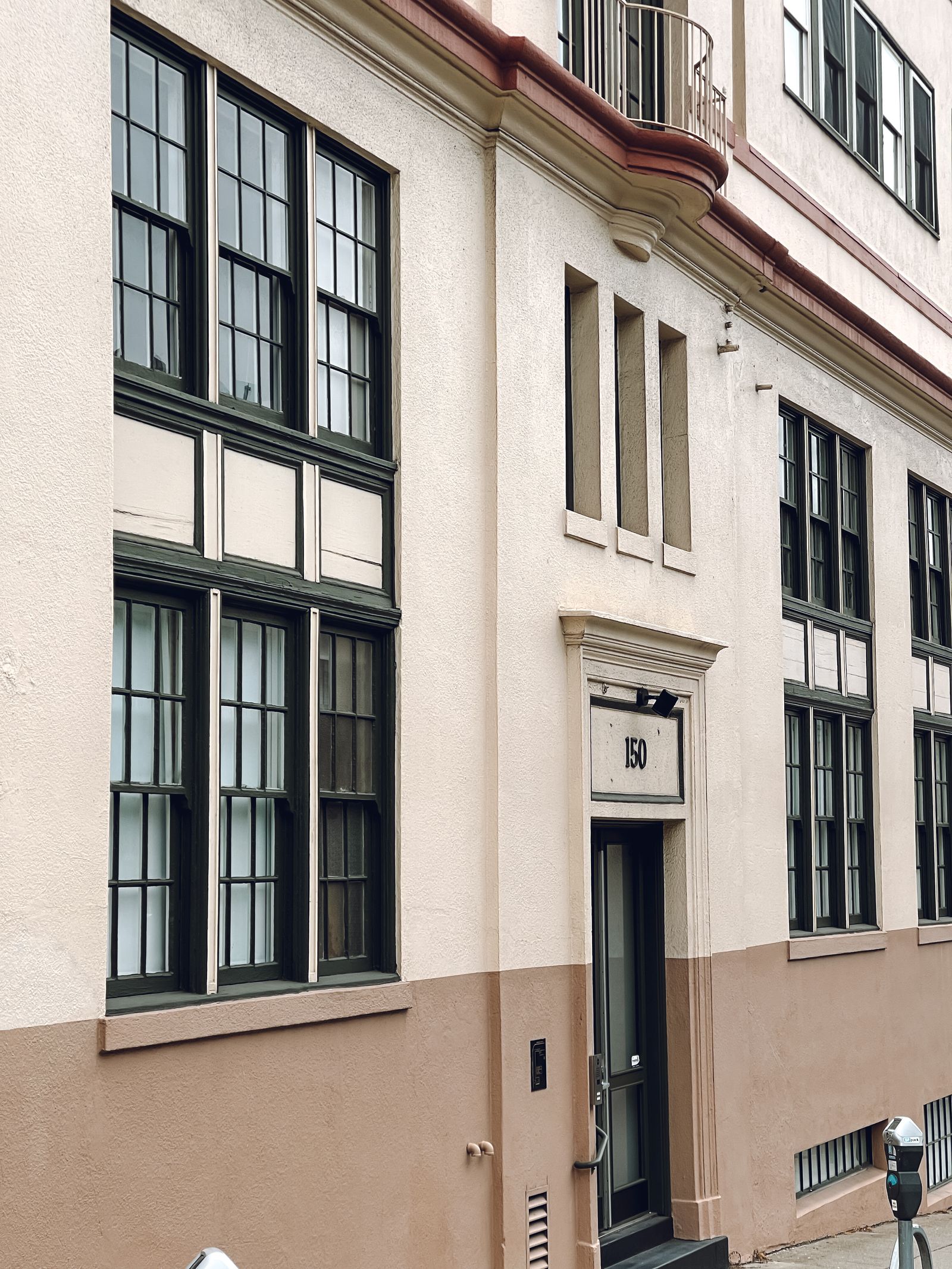
Newark commercial exteriors commonly combine older brick and mortar with concrete, painted block, stone, stucco, EIFS, metal panels, glass, sealants, signs, and repaired sections. These materials do not share one pressure limit or one cleaning chemistry. A tested soft-wash process may loosen compatible organic film, mildew-like discoloration, pollen, and ordinary atmospheric soil when dwell time, concentration, temperature, rinse, and protection are controlled. The objective is a cleaner maintenance condition, not a guarantee that every dark mark disappears.
A proposal should separate cleanable soil from conditions that need another trade or a different process. Efflorescence, rust, oxidation, carbon staining, grease, paint, adhesive, failed coating, open mortar, cracked concrete, leaking roof edges, and damaged EIFS may remain or require specialty testing. On glass, soft washing can support a rinse but cannot squeegee panes, scrape bonded deposits, polish etching, or correct failed seals. We use representative test areas to confirm likely improvement and establish realistic expectations before committing to broad elevations.
- Compatible facade fields with organic or atmospheric surface film.
- Separate treatment plans for masonry, coated panels, glass, and hardscape.
- Test-area observations, documented exclusions, and a defined finish expectation.
- A cleaning scope that does not disguise repair or facade-condition work.
Neighborhoods, roads, and property types change the plan
Downtown Newark around Broad Street, Market Street, Washington Street, Halsey Street, and the Prudential Center has tight sidewalks, transit movement, deliveries, event surges, and entrances that cannot simply be blocked. A property near University Heights may have campus circulation, institutional security, laboratories, student movement, and sensitive air intakes. In the Ironbound, Ferry Street and surrounding commercial blocks can add restaurants, outdoor seating, mixed-use entries, and narrow staging areas. Each elevation needs its own public-edge and water-routing review.
The airport, Dayton, North Ironbound, and port-side industrial areas have a different operational rhythm. Truck courts, loading docks, rail interfaces, security gates, parking, forklifts, and shift changes can conflict with hoses, recovery equipment, or a lift. Along McCarter Highway, Route 21, Route 1&9, and the New Jersey Turnpike approaches, traffic and sight lines matter even when the building has a broad wall. A hotel near Newark Liberty International Airport may have room for equipment but still require guest-route protection, flight-sensitive scheduling, and airspace review if aerial equipment is proposed.
Access should follow the facade, not the other way around
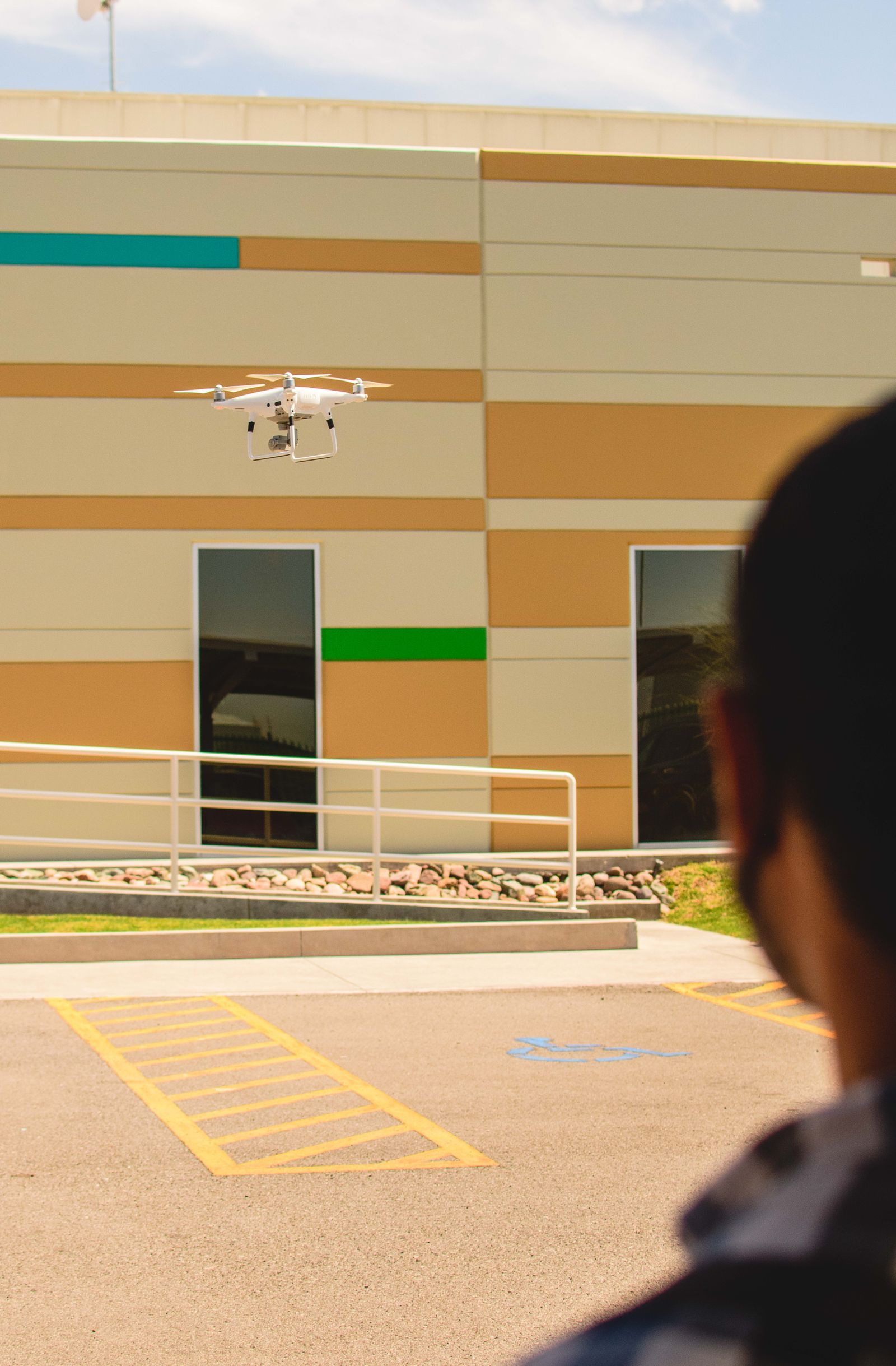
Soft washing can be delivered from ground equipment, poles, lifts, or selected drone-assisted applications. A drone may help wet or rinse a broad, compatible upper elevation where visual line of sight, stand-off distance, launch and recovery space, wind, hose routing, and ground separation are workable. That can reduce repeated lift repositioning on an open facade. It does not turn every high wall into a suitable drone job, and it cannot brush, squeegee, scrape, repair, inspect a loose detail, or detail a recessed storefront frame.
A lift or direct-contact method may be better for stubborn deposits, narrow setbacks, ledges, fins, balconies, deep reveals, delicate architectural details, or a restoration-level glass finish. Newark's wires, trees, elevated roadways, active sidewalks, neighboring buildings, roof equipment, and airport proximity can narrow an aerial path. Commercial UAS work also needs to fit current FAA Part 107 requirements, including the applicable rules for people, moving vehicles, visual line of sight, and controlled airspace. Property permission is not a substitute for aviation or public-space controls.
- Ground soft washing for reachable walls and controlled lower elevations.
- Drone-assisted wetting or rinsing only on approved upper facade zones.
- Lift, pole, or hand detail where contact and inspection are necessary.
- A fallback method when weather, airspace, or site separation changes.
Newark weather, water, and runoff need a written scope
Newark's seasonal pattern brings humid summers, rainfall, pollen, freeze-thaw exposure, snow, and winter salt at entrances and lower walls. The Newark area climate record shows that precipitation and snow are not edge cases for exterior maintenance. Wind around tall downtown buildings, river-facing elevations, airport fields, and open industrial yards can differ sharply from conditions at the equipment location. Direct sun can shorten dwell time and accelerate drying; cold shade can leave wet pavement slick or increase icing risk. We set pause conditions for wind, rain, lightning, visibility, temperature, and spray control.
Water moves beyond the wall. Before mobilization, the crew and property contact should identify the water source, flow, hoses, low points, curb inlets, catch basins, basement doors, loading areas, landscaping, neighboring property, and any path toward the Passaic River or other receiving waters. NJDEP explains that stormwater discharges are regulated through the NJPDES program. A grate is not automatic permission to discharge wash water. Depending on the product, volume, loosened soil, and site drainage, the plan may require inlet protection, diversion, collection, recovery, filtration, reduced application, or current authority guidance.
Keep occupied Newark properties open and predictable
A cleaning day should be coordinated around the building's actual use. Tell us about employee arrivals, tenant hours, restaurant service, hospital or clinic access, student transitions, deliveries, event calendars, accessible routes, outdoor seating, emergency lanes, and security procedures. Staff can also identify operable windows, air intakes, known leaks, recent sealant work, fragile signage, and roof equipment. We can phase elevations into smaller work zones with clear notices and stop authority when normal conditions change.
Protection includes more than cones under a spray pattern. Hoses, water equipment, spotters, wet pavement, launch or recovery areas, doors, vehicles, and temporary barriers all affect the route. An Ironbound restaurant, a downtown office lobby, a University Heights institution, and a Turnpike-facing distribution property need different controls. Closeout includes a check of entries, sidewalks, loading areas, delayed runoff from ledges and canopies, treated elevations, exclusions, and any condition that should be referred to a facade, roofing, glass, or masonry specialist.
Request a Newark soft-washing quote with useful details
Send the address, building use, target elevations, approximate height, facade materials, photos, known stains, water access, preferred work windows, tenant restrictions, and any history of leaks or repairs. Mention whether the building sits near a busy sidewalk, school or campus route, restaurant patio, airport operation, truck court, riverfront edge, or shared property line. These details help determine whether a remote review, site visit, test area, or alternate access method is the right next step.
The proposal should identify surfaces and elevations, cleaning chemistry approach, expected improvement, water and runoff assumptions, access, public protection, weather limits, exclusions, and closeout documentation. It should distinguish maintenance cleaning from repair, facade inspection, glass restoration, coating work, and environmental permitting. If compatible soil is present on a manageable surface, soft washing may be a practical maintenance option. If the building needs contact detail or has a condition that should not be washed, the responsible recommendation may be a hybrid scope or postponement.
Drone Building Cleaners serves Newark offices, retail, hospitality, institutional, mixed-use, warehouse, and industrial properties with a planning-first approach. Request a commercial soft-washing assessment for a cleaner facade, a workable operating window, and a written scope your property team can approve before equipment arrives.